Expert Pelvic Floor Therapy and Somatic Support
Serving Jamaica Plain, Greater Boston, and Beyond
Testimonials
-
“I have made progress with Mirah that I've never made with other providers and didn't even know would be possible. This is thanks to their gentle and patient approach, prioritizing my embodied feelings of safety.”
-
"Working with Mirah is truly a life-changing experience. The care, intentionality and thoughtfulness that they put into their work makes for a safe and trustworthy environment."
-
"Mirah is the most gentle and compassionate provider that I’ve ever had. I can’t speak highly enough of their work and their dedication to meeting each person where they’re at."

Promoting pelvic health and nervous system care through compassion, creativity, and collaboration
LGBTQIA+ affirming. Trauma-informed.
Specializing in perinatal care, sensitized nervous systems, hypermobility/hEDS, and chronic conditions

Conditions Treated
-
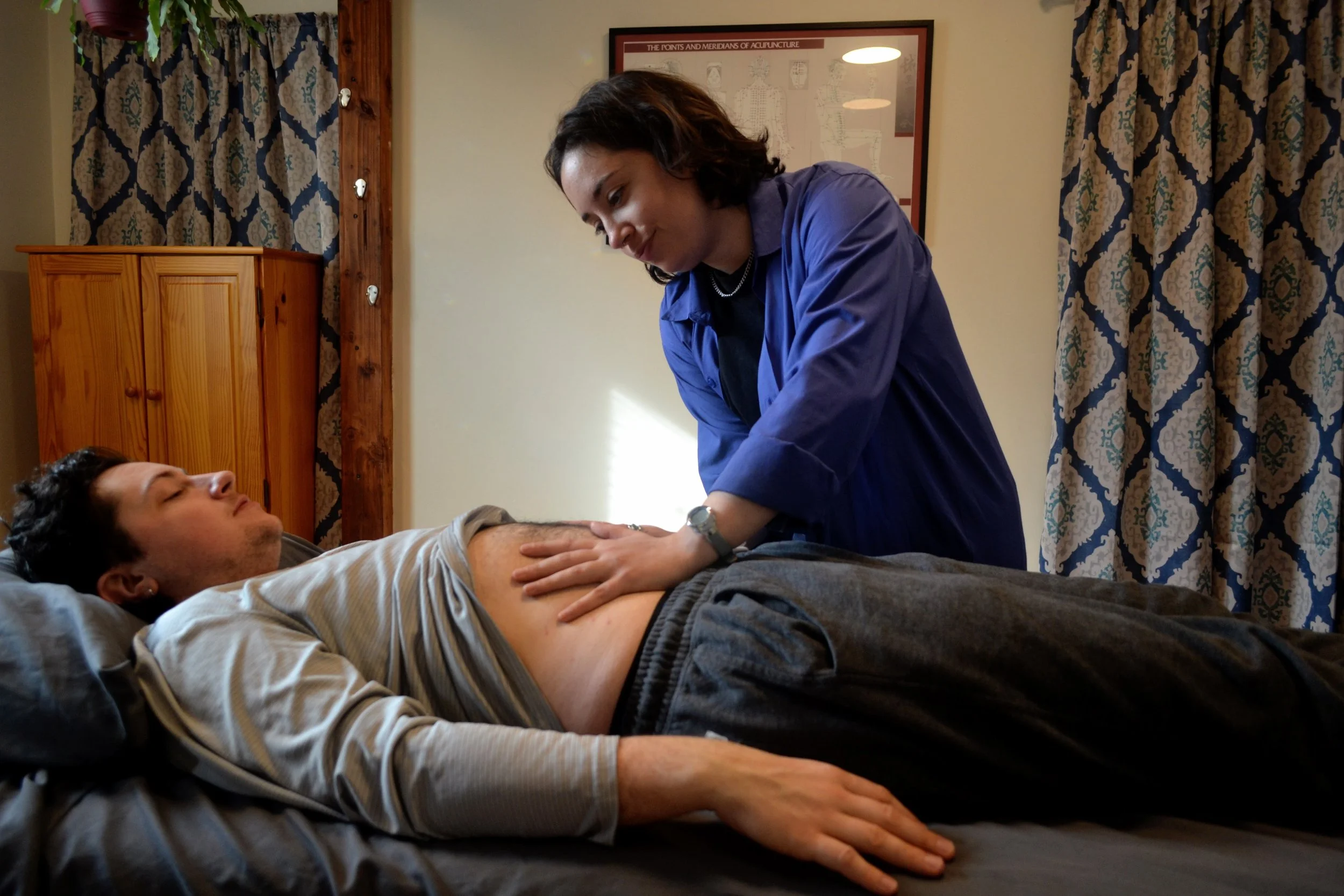
I work with a vast array of conditions with all genders, including chronic pelvic pain, endometriosis, interstitial cystitis, IBS, vaginismus, pain with sex, vulvodynia, and lichens sclerosis/planus. We move at the pace you need, with your unique goals in mind. We’ll use a variety of techniques including pain neuroscience education, manual work (internal or external), visceral mobilization, breathwork, movement, and somatics.
-
It’s incredibly helpful to have as much support as possible during this period in your life. I support my clients with birth preparation, incontinence, constipation, core rehabilitation/diastasis recti, sacroiliac joint dysfunction, symphysis pubis dysfunction, returning to exercise, prolapse management, and body mechanics for the early postpartum stage. We work on creating a program that fits easefully into your life. Any pregnant person can benefit from pelvic floor therapy to prepare their body, regardless of whether or not they’re experiencing dysfunction! We’ll work on creating mobility in the pelvic floor to prep for labor, as well as strengthening to support you in the postpartum stage.
-
Bowel and bladder issues do not need to rule your life. I work with people of all genders on becoming leak free, as well as resolving chronic urinary urgency and bowel dysfunction. We’ll work on developing healthy bowel and bladder habits, manual techniques, and movement to help you work towards your goals.
-
It can be useful to learn more about the pelvic floor before any gender affirming surgery, as well as receive support for aftercare. We can work on pelvic floor mobility, deep core strengthening, and dilator training as appropriate. We’ll work on appropriate aftercare and returning to activity post-surgery.
-
The idea of seeing a pelvic floor therapist can feel intimidating or overwhelming. We will get creative and collaborative about what our work will look like together, and how to do it in a manner that deeply honors your felt experience. My trauma-informed care is abundantly queer and trans affirming, and grounded in anti-oppression frameworks. I use a wide range of techniques to support the nervous system including meditation, mindfulness, breathwork, somatics, manual therapy, and movement.
FAQs
-
Pelvic floor therapy aims to support people experiencing challenges with pelvic pain, incontinence, pelvic organ prolapse, and GI difficulties (constipation, fecal incontinence, etc). I am to give clients the tools to be their own healers through the use of manual therapy, education, strengthening and exercises, and home programs.
-
During your initial evaluation, my primary goal is to get to know you and your specific challenges. Sometimes we spend the whole first visit just going over your health history! Because pelvic health is so multifactorial, reviewing your history with care is especially important. Sometimes the initial evaluation is more hands on, with a musculoskeletal evaluation and/or pelvic floor assessment. Ultimately, I think of the “evaluation” as spanning multiple sessions, as we work together to get to the root of what has been causing your pelvic floor dysfunction. At the end of your first session, I’ll provide you with some exercises to jumpstart your progress.
-
Every pelvic floor therapy session looks different, because everyone has different needs! I use movement, external and internal manual techniques, mindfulness and somatic-based training, dilator training, and so much more. I tend to use a lot of coaching and educational approaches in my work, so sometimes we’re just talking for the whole session. We make a plan together at the beginning of the session based on how you’re feeling that day. My goal is for every client to leave a session feeling both empowered and relaxed.
-
Nope!
Internal vaginal or rectal manual work can be a great treatment tool for many, but it’s not for everyone. I’ve created whole treatment plans for clients that don’t involve any internal work. Your progress is not dependent on it!
-
I often say that I bet most pelvic floor physical therapists look more like occupational therapists than the average PT, and most pelvic floor occupational therapists probably look more like physical therapists than the average OT.
Most pelvic floor therapists are physical therapists, although more and more occupational therapists are training in this specialty. If someone has high orthopedic involvement in connection with their pelvic floor, (i.e. following a surgery or sports injury), I might suggest they see a PT over me. I’ve mostly been trained by PTs in my pelvic floor training, and feel confident in treating the hip, pelvis, and lower back for most general conditions.
Occupational Therapists receive much more mental health training than PTs, which is incredibly important as a pelvic floor specialist. Additionally, occupational therapists are trained to support people in their functional goals, i.e. what activities are really meaningful to you? How do we design a program that’s tailored to your unique strengths and preferences? Occupational therapists receive extensive training in sensory processing as well, which can be an essential part to working with chronic pain.
I’ve pursued extensive post graduate training in order to provide the best care possible. My take is that this work is often very provider specific, beyond whether a person is initially trained as a PT or OT. Whether you go to pelvic floor physical therapy or occupational therapy, I think it’s most important that you feel comfortable and at ease with your practitioner.
-
In order to offer the highest quality care, I do not take insurance at this time. I sincerely believe that I couldn’t work at the speed, intentionality, and care that I do under an insurance based model. I am happy to provide you with a superbill, which you can submit to your insurance company for reimbursement. Many insurance companies will reimburse you for out of network providers. I know pelvic floor therapy can be an investment, so I will work with you to figure out what pacing and scheduling works best.
-
I understand that for so many of us, seeing an out-of-network is not feasible.
If you do have a choice, I highly recommend seeing someone of network, even if it isn’t me. I believe that the deliberateness, intentionality, and thoughtfulness needed to be a good pelvic floor therapist is not possible in an insurance based model, which is based on efficiency and productivity. I want to only be thinking about the client in front of me, not what I need to bill and document in order to justify my clinical decision making.
Other reasons why out of network might work best for you: you have a high deductible, you have an HSA/FSA that you aren’t using, insurance based models have long waitlists, or it’s just more convenient for you to see someone right in your neighborhood.
